

What form of return?
Permanent, gradual, on trial or dual residence: choosing the form of the return changes everything else.
 Moving back
It is not one person moving back, it is a family: the questions to ask, in the right order, to turn it into a clear plan.
Permanent, gradual, on trial or dual residence: choosing the form of the return changes everything else.
The parent who works, the one who handles school and health, the children depending on their age: everyone must find their place in the project.
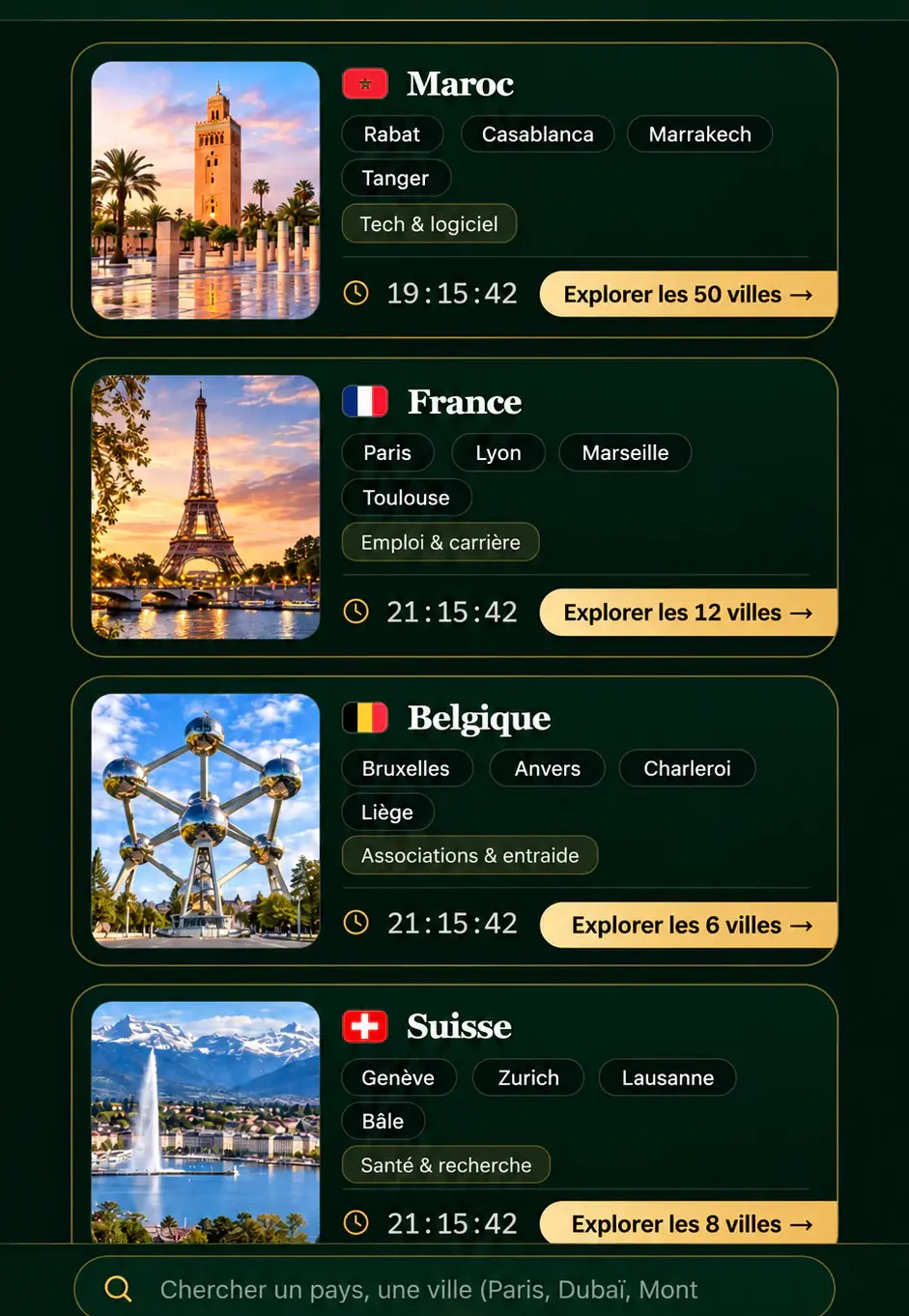
Compare cities according to what matters to your family: school, housing, health, transport.
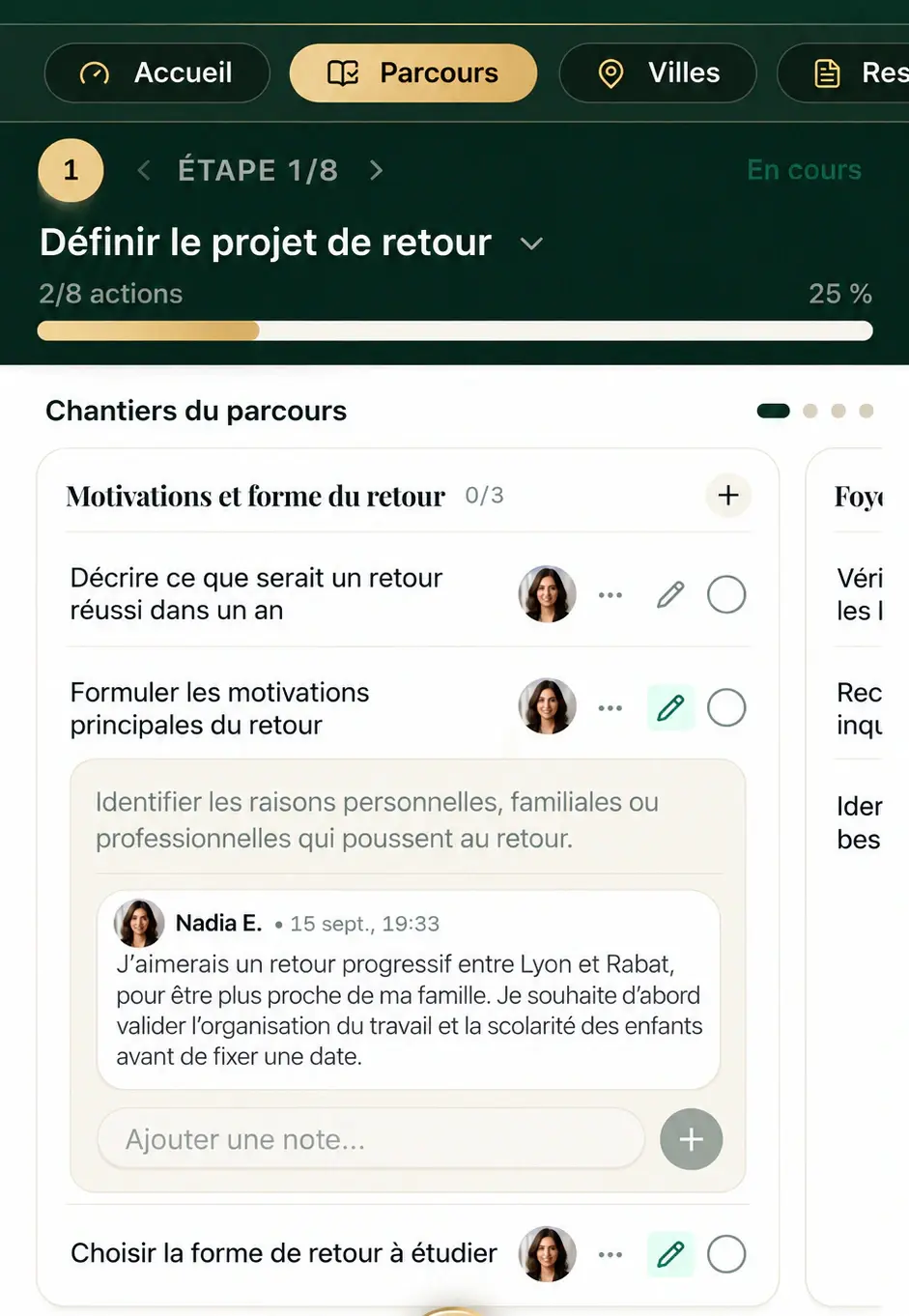
Eight steps, from the decision to the 90-day review after arrival.
A private and free space that asks all these questions with you, and creates your journey from your situation.
Discover the B2M journey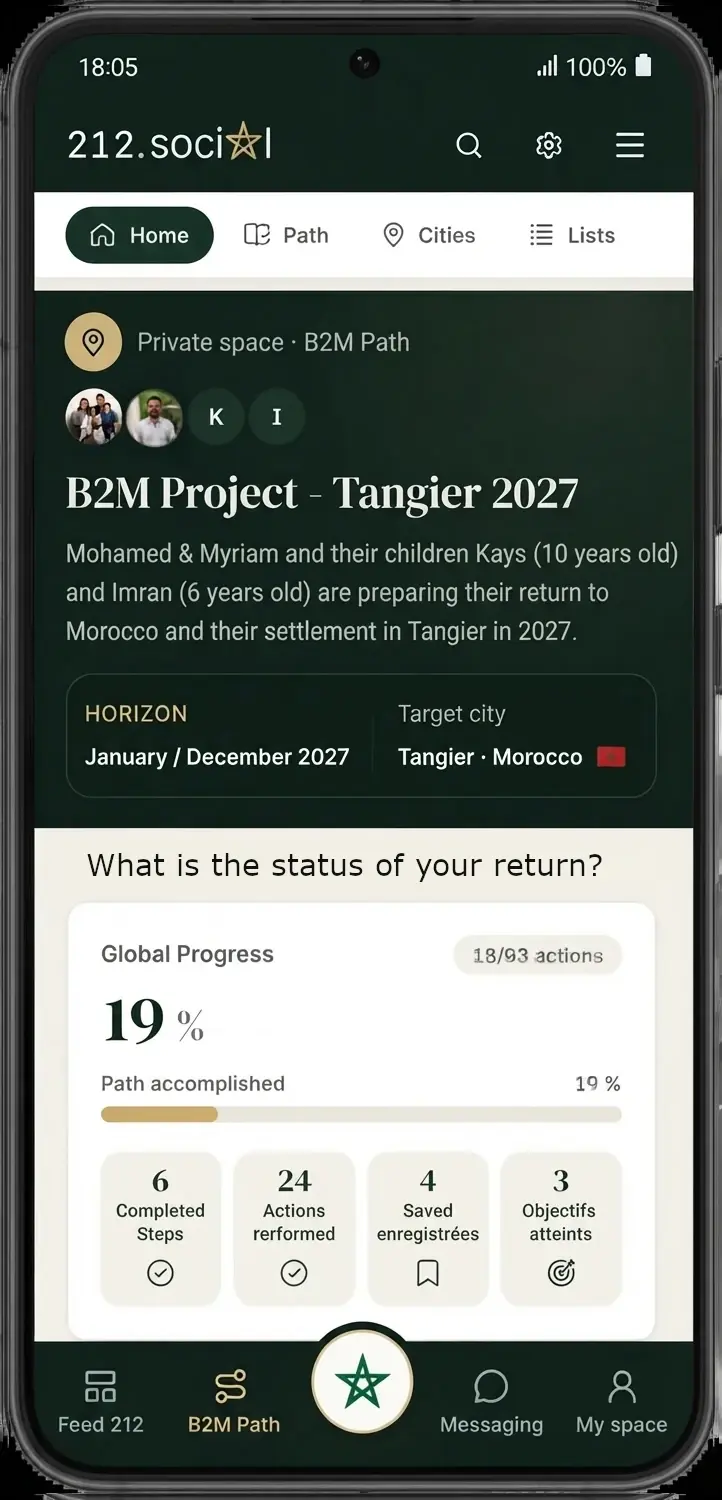
You describe your household’s starting situation.
Predefined steps, pre-filled according to your situation.
You adjust steps, actions and priorities at your own pace.
Frequently asked questions
With the form of the return and its conditions: who goes, when, permanently or gradually, and what would make the project acceptable for everyone. Feasibility (income, school, housing, health) comes next, before comparing cities.
By weighing what really matters to the household: schools suited to the children, housing prices, work, access to healthcare, transport and closeness to family. Comparing two or three cities with a costed budget avoids deciding on a single holiday impression.
Many families rent for a few months first to test the neighbourhood, the school run and the pace of life, then buy once settled. Prices vary widely from one neighbourhood to another: it is better to compare neighbourhood by neighbourhood than at the scale of a city.
It depends on the household, but schooling often sets the timetable: a move is usually prepared for the start of a school year, with school enrolment several months ahead. The 30- and 90-day reviews after arrival are part of the return.